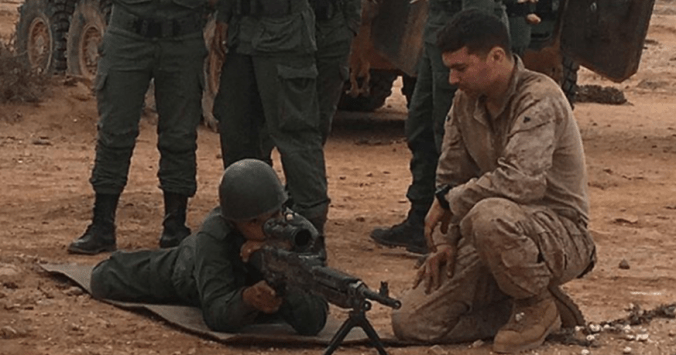
A Marine from Light Armored Reconnaissance instructing allied soldiers on the proper handling of the M240 medium machine gun.
In a world in which America seems to be receding from its previous role in global leadership, it is important to remember how dependent we are upon a network of strong global and regional allies for our own national security. Though these alliances are established and negotiated by diplomats and politicians, they are maintained by the soldiers who must train, fight, and sometimes die together.
For example, through all the years of political and diplomatic neglect of Iraqi Kurds by various US administrations, Peshmerga forces and the regional government in Erbil have stuck by us as allies because of the uncommon connection built between US troops and Kurdish paramilitaries, including US forces using their own bodies as shields to deter fighting between Kurds and Turkey. Such alliances rely on deep, interpersonal engagement towards a common mission. They cannot be sustained through State dinners alone.
This is why keeping US troops forward deployed, training with and living among our global allies, is so important. To continue to keep America safe, and our alliances strong, it is imperative that these overseas partner-training missions continue, year after year.
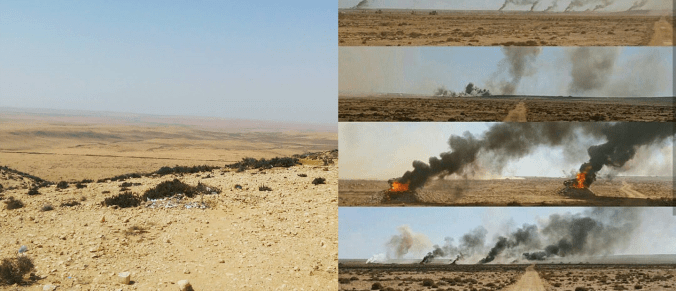
Sometimes, the desert is peaceful. Sometimes, the host-nation military douses old tank-hulls in gasoline and lets United States Marines shoot artillery and automatic weapons at them.
*
For a few weeks this spring, more than a thousand Marines, along with units and specialists from the Army, Navy and Air Force, joined units and representatives from over a dozen European and African nations in the desert, skies and seas of the partner nation, to participate in Operation African Lion.
The primary purpose of the exercise was to reinforce the training of a Marine Reserve infantry battalion, as well its supporting reconnaissance and artillery elements, to establish forward operating bases and outposts in harsh terrain; reinforce combined arms principles and interoperability; and coordinate with the partner nation militaries to increase their capacity to combat violent extremist organizations (VEOs), and contain regional instability.
These types of exercises are crucial to national security for a number of reasons. First, they afford our own military the opportunity to train in environments not available in the United States, in order to more effectively simulate the environments in which we are likely to fight- either currently or in the future.
Second, these overseas training exercises allow our military to build host-nation capacity, as US troops demonstrate the complex tasks of combined arms war fighting, such as battle space geometry and air space deconfliction, logistics, signaling and other processes. In addition, these exercises allow for us to train with our allies, increasing the level of interoperability necessary to enable successful coalition operations.
Third, and most importantly by far, these exercises allow us to work on the most critical element of our national defense: that of our relationships with our allies, from the highest levels of diplomats and generals, down to the relationships between the soldiers and civilians of the host-nation and partner nations and our own Marines, soldiers, sailors and airmen.
As a non-commissioned officer in a Marine Light Armored Reconnaissance company, it is this level which I know most about, and which I consider to be crucial. Diplomats and generals can coordinate strategy, or agree upon and order these types of exercises, but it is the Marines of the line units that must perform the partner capacity-building mission, through demonstration and instruction in the tactics and processes which the allied soldiers will then use to ensure the stability and security of their own nations. It is at this level as well that valuable interpersonal relationships are formed.

Marines building relationships with allied host-nation soldiers. Allies’ faces have been blurred due to social media/ internet prohibitions their government has in place.
Why are relationships so important to our national defense? Of course, there are the practical reasons. Knowing how to coordinate, operate and get along with our allies is a complex, delicate dance. Our interactions with allies are always fraught (think of our on-again/ off-again relationship with France, which runs the gamut from statues of the Marquis de Lafayette to Freedom Fries), and this becomes increasingly more complex once one enters the Muslim world. We have a less-than-perfect batting average when it comes to understanding the cultural and religious topography of a region of the world that is home to nearly 2 billion people.
We have failed to understand the huge chasm that separates the political-religious communities of Shi’ite and Sunni Muslims, and the implications that divide would have on a post-Saddam Iraq. We have misunderstood the tribal and ethnic divides in Afghanistan, and the difficulties of administering good governance in such a fragmented society. US troops continue to fight and die in both nations nearly two decades after we commenced military operations in the wake of 9-11. Even today, US troops, policy-makers and diplomats struggle to navigate the complex relationships between ethnic, religious and political communities in the Middle East, as the Syrian Civil War continues to devolve into chaos with no end in sight.
Often, US troops enter such combat zones with only a cursory series of trainings and classes on cultural sensitivities, a few phrases of Arabic (just as often aggressive phrases such as “stop!” or “hands behind your head,” as they are pleasantries such as “thank you,” and “good morning”), and little else to help them navigate these complicated cultural landscapes. Partner exercises with allies from Muslim-majority nations provide an invaluable tool in our national defense toolkit, giving our service members the opportunity to speak, eat and train in the environments to which they may be later deployed.
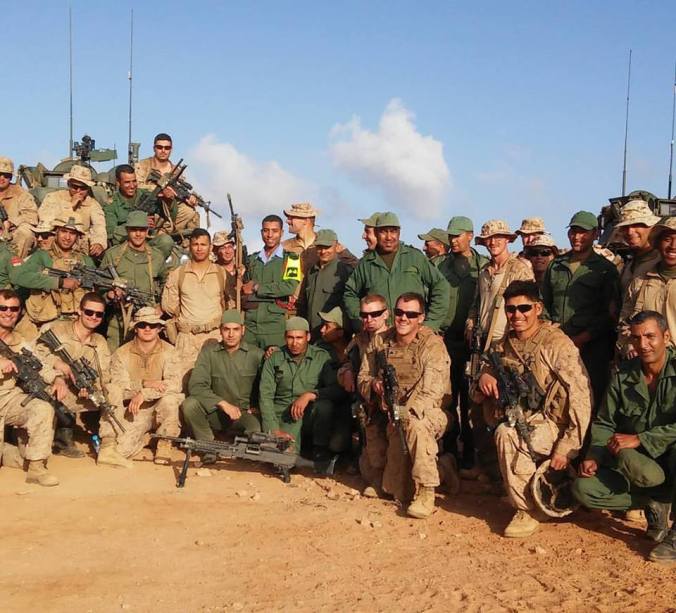
Alliances depend on living, working and training together.
It is best to go from big-picture to personal at this point: my Reserve unit is primarily composed of Marines from rural Maryland, Virginia, and West Virginia. Those of us from cities like Washington, Baltimore or Richmond are in the distinct minority. Rural Americans make for excellent service members, as many of them will already know quite a bit about field craft, tracking, shooting and have a degree of mechanical aptitude that we city slickers often have to learn after joining the Marine Corps (I personally had never shot a rifle until boot camp, for example).
That said, not many rural Americans have much direct cultural experience of other nations and cultures (this article from 2011 demonstrates this statistically) yet these same rural Americans make up a disproportionate percentage of those serving in Armed Forces since 9/11. Given the extraordinarily complex nature of modern American military missions, combining air campaigns, land operations, stabilization, peacekeeping , counter-insurgency and counter-terror components, familiarity with foreign cultures is a distinct advantage to the individual, unit, and military conducting this complicated mission set overseas.
Our first day spent interacting with our African allies was an interesting experience. Because I speak one of the national languages (a legacy of the past period of European imperialism in the region), I was able to intermingle freely and easily with our allies, but it was more difficult for my fellow, monolingual, Marines. For the first few hours the allied soldiers and the Marines of my unit stood separately, smoking and congregating in small groups, finding it difficult to communicate. Once Marines began to eat chow though, our African allies found some common ground upon which to build a relationship… mostly because they were curious about, and a little disgusted by, our rations (MREs, or Meals Ready to Eat).

Image credit to Texas On My Mind blog. The photo is captioned: “Supposedly this is sausage. It smelled and tasted like canned dog food, so I gave Riley (my dog) most of it.” Yum.
Now, MREs are famously revolting. One insightful review from The AV Club states:
“Perhaps the most immediately impressive thing about these meals is their attempt to recreate an actual eating experience… somebody, somewhere decided that hot meals and a variety of drinks were important, even if flavor and texture were thrown out the window completely…
But why would the people at Ameriqual Foods (of Evansville, Indiana) attempt to stuff a cheese omelet with vegetables into a reheatable plastic sack? In what corner of Evansville, Indiana is that an acceptable thing to do?
But overall, if you subtract the two biggest pieces of each MRE—the main course and some sort of side dish—you could probably last a few unhappy weeks on them… It’s probably just enough to make you a little bit angry, and if killing is your business, then anger maybe isn’t the worst thing in the world.”
Our allies, who lack the complex military logistical chain, and advanced manufacturing economy, that can deliver forward deployed troops, anywhere in the world, a disappointing simulacrum of room temperature “beef stew” in a bag (with a 2-3 year shelf life, no less), instantly took pity on us. Their field kitchens supplied them daily with fresh bread, fish, lamb and chicken, tinned vegetables, dehydrated lentils, and fresh fruit. Even with the language barrier and little cultural frame of reference to share with us, they could see that our food was gross, and theirs was not. Thankfully, they decided to share.
We were brought fresh bread with tinned sardines, and this simple gesture broke the ice and left our Marines thankful (anyone would be, after a few days of MREs), and much more open to the concept of interpersonal relationships and intimate cross-cultural experience. By the end of that first day, the Marines and our allies were becoming fast friends, communicating in a pidgin of isolated Arabic phrases, common English words, onomatopoeia (“Boom” and “bang” were especially popular ones, given the preponderance of weapons and explosives in the immediate vicinity), and hand gestures. I was called in to translate a fair bit, but overall most of the interpersonal communication went on without me.
What followed were many productive days, consisting of us familiarizing hundreds of our new friends with the intricate thermal sight systems of the LAV’s 25 mm main gun, technical discussions of combined arms tactics and techniques, range time firing their plethora of vehicle-mounted Russian heavy weapons, and many a shared meal of grilled chicken or sardines, beet salads, stewed lentils, and fresh baguettes (“our kitchen here can produce 3,000 of these a day,” one of their officers told me in immaculate, gloating French), which culminated in a Final Exercise involving troops from multiple nations, successfully executing combined arms assaults in a proficient manner. This was, in turn, followed up by a post-FinEx feast, in which the US service members shared one last meal with our partners, and were treated to local dance and music as well.
During our time out there, a lot of military training occurred, and there is absolutely value in that. But in our era, when more and more Americans seem predisposed to tune out the rest of the world, to look inwards and give our allies less attention, missions like the one that took place this past month in North Africa are invaluable.
They give our service members an opportunity to train in new environments in which they may one day have to operate in combat. They teach them to find common ground with people with whom they may have little in common. But, most importantly, they teach them to build bridges and form relationships with soldiers of other nations they may not share a language with. In an era in which ever more Americans fear the world outside our borders, these joint partner-missions have never been more important.
 Twilit Empire